Chess on a Budget: Practise Your Openings Without a Subscription
Affordable hobbies
A rewarding hobby does not have to begin with another monthly payment. Before buying a chess course or upgrading a membership, try a focused free resource and see whether its approach suits the way you enjoy learning.
A practical guide to trying a free learning resource before buying extras.
Try the learning method before committing to a payment
Start with a focused free resource, see whether you enjoy using it and identify any genuine gap before comparing paid extras. The useful question is what you will use, rather than how much a package contains.
Start with practice before buying extras
It is easy to turn an interest in chess into a shopping list: a new set, a course, a book and a premium account. Each may have a place, but purchasing them together makes it harder to know which one actually helps. A better starting point is to identify the part of your game you want to work on and try a resource that addresses that need.
If the first few moves often leave you guessing, a chess opening trainer such as Chess Openings Mastery offers a focused place to begin. The site presents its training as free with no signup, so you can explore the approach before deciding whether to spend on additional chess products.
This is a value-for-money question as much as a learning question. A tool you return to and understand may be more useful to you than a larger collection of material that remains untouched. Start with a specific purpose rather than the promise of an all-in-one upgrade.
What the free resource offers
Chess Openings Mastery lets you choose an opening and practise a line by playing moves on a board. Its homepage describes immediate feedback and repeat practice, with progress saved locally in your browser. Written learning pages sit alongside the trainer, giving you explanations to read as well as sequences to recall.
That makes it a focused resource rather than a reason to buy an entire package at once. Read the ideas behind the opening, try a short line and notice what you find difficult. If you prefer this format, you have a clearer basis for deciding what to study next.
The browser-local progress model is also worth understanding. If you expect a signed-in learning record that follows you between devices, do not assume it works that way. Choose a regular browser for your practice and check the site's current information before relying on any particular feature.
Make a small routine you can keep
A practical first session could be modest: read one explanation, try one short line and make a note of the idea you want to remember. Return to it on another day before adding a large number of alternatives. This is a suggested routine to try, not a promise about how quickly you will improve.
The site's opening-study guide encourages combining ideas, recall and lessons from your own games. That is a useful distinction when considering what you need next. Forgetting a sequence and overlooking a tactic later in the game are different problems; buying more opening material will not automatically answer both.
Keep enjoyment in the decision too. Some people like short drills; others prefer a book, a club evening or talking through a game with a friend. Free practice is a useful experiment because it lets you discover whether a particular method fits your interests before making a purchase.
Use what you already have
For a first look at an online resource, begin with the device and setup you already use where they are suitable. You can decide later whether a physical board, a larger screen or a printed notebook would make practice more comfortable. Separate a genuine need from something that simply looks appealing alongside a new hobby.
If you do want equipment, list the features that matter before comparing prices. For a chess set, that might include a readable board, pieces you can distinguish easily, storage and whether it needs to travel. A decorative set and a practical everyday set may serve different purposes.
The same thinking applies to courses and memberships. Ask what you will use this week, not how many features a package contains. An extensive library has limited personal value if finding the right starting point becomes another task you avoid.
Decide what a paid option would add
Free does not mean every paid alternative is unnecessary. A teacher, a carefully chosen book or a service with features you genuinely use may be worthwhile. The useful question is what specific gap the purchase would fill: an explanation you need, structured guidance, feedback on your own games or another clearly defined benefit.
Before agreeing to a subscription, check its full price, billing frequency, renewal terms and cancellation process. If a trial or introductory offer is involved, read what happens afterwards. Compare the standard ongoing arrangement with how often you realistically expect to use it, rather than judging only the opening offer.
Keep separate services separate in your comparison. Chess Openings Mastery includes disclosed affiliate links to Chess.com membership offers. Those external products are distinct from the free trainer described here; check the destination's own current features and terms if you choose to explore them. No paid purchase is needed merely to try the free resource.
Judge the value by how you use it
After a few sessions, ask some simple questions. Was it easy to find your starting point? Could you explain the purpose of the moves you practised? Did the format make you want to return? Those answers give you more useful information for a future purchase than a list of features viewed before you have tried anything.
Avoid treating a progress marker as proof of a wider result. Recalling a training line is one part of chess, and an opponent can choose a different move. There is no guaranteed rating increase, improved intelligence or financial benefit attached to the routine suggested in this article.
VoucherBro's approach is to look at usefulness before the headline offer. Starting with a free resource gives you room to explore an interest, learn what you enjoy and spend later only where there is a clear reason. For chess openings, that can be as simple as choosing one line, understanding its ideas and coming back to practise it again.
Sources and editorial notes
Published 27 October 2026 by Admin. Features checked on the Chess Openings Mastery homepage and its opening-study guide. The site presents the trainer as free with no signup and browser-local progress at the time of review; availability can change. External affiliate membership offers are separate. The routine is an editorial suggestion, with no guaranteed learning result, voucher code or claimed monetary saving.
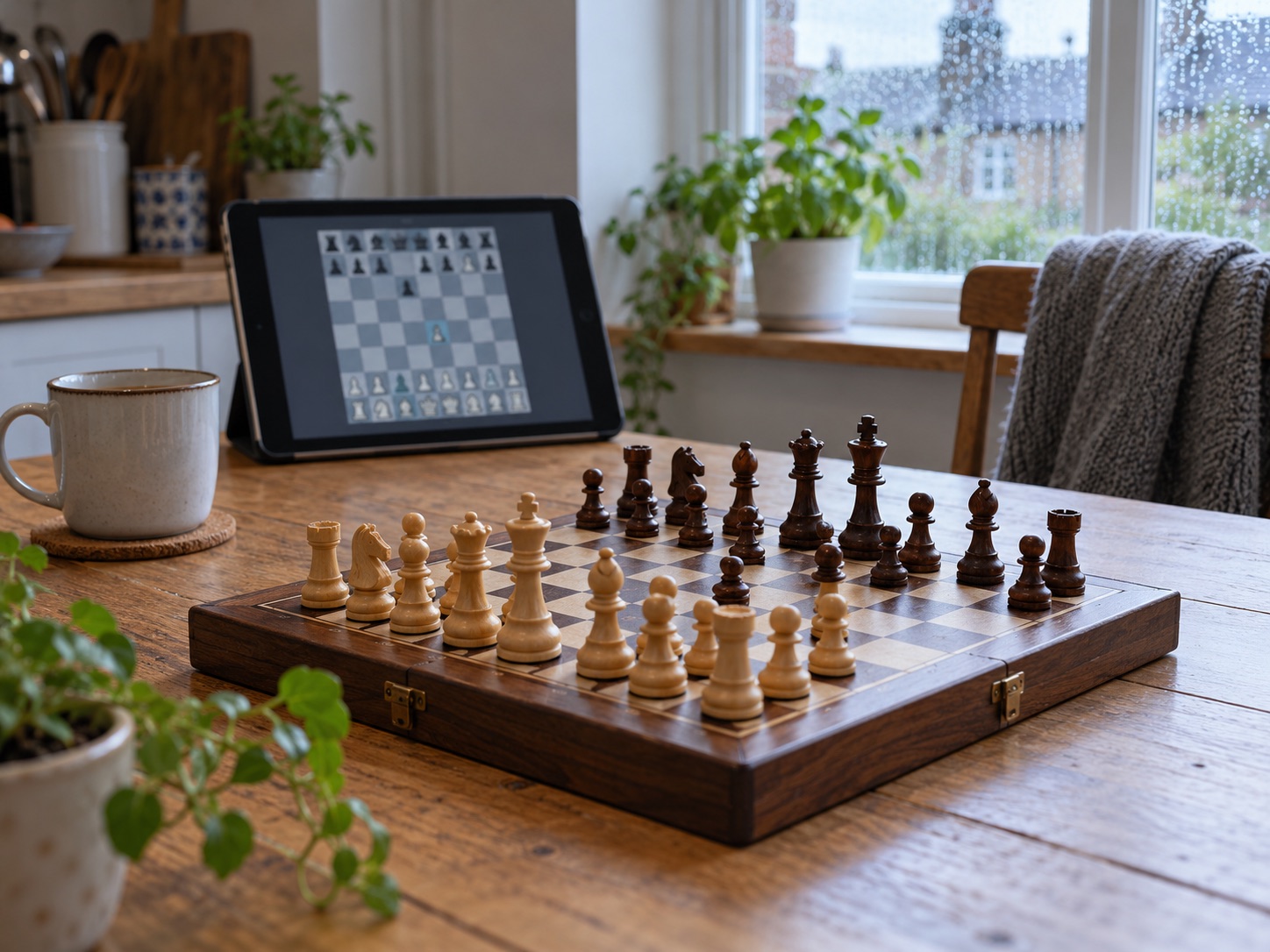
Image: a new AI-generated home-hobby illustration, not a screenshot of the reviewed site or an instructional chess position.